01The practice
Concepting is where a brief becomes a reason to care. Most work fails here and gets blamed later on execution: the layout is fine, the copy is clean, and the whole thing is forgettable because nobody found the idea first.
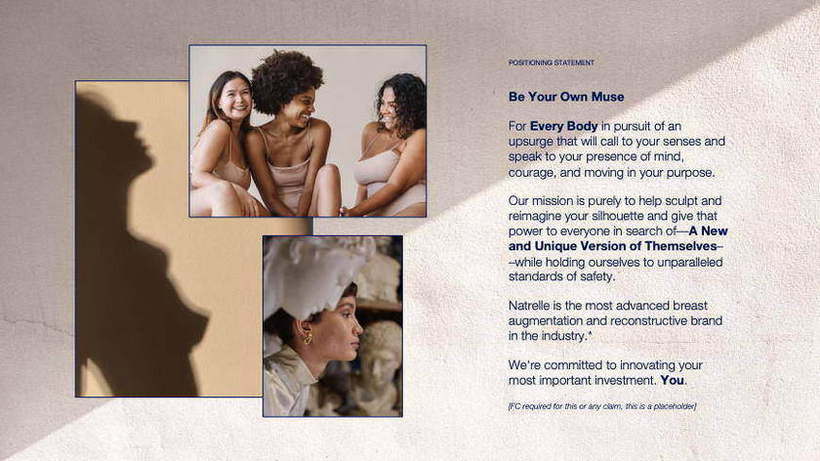
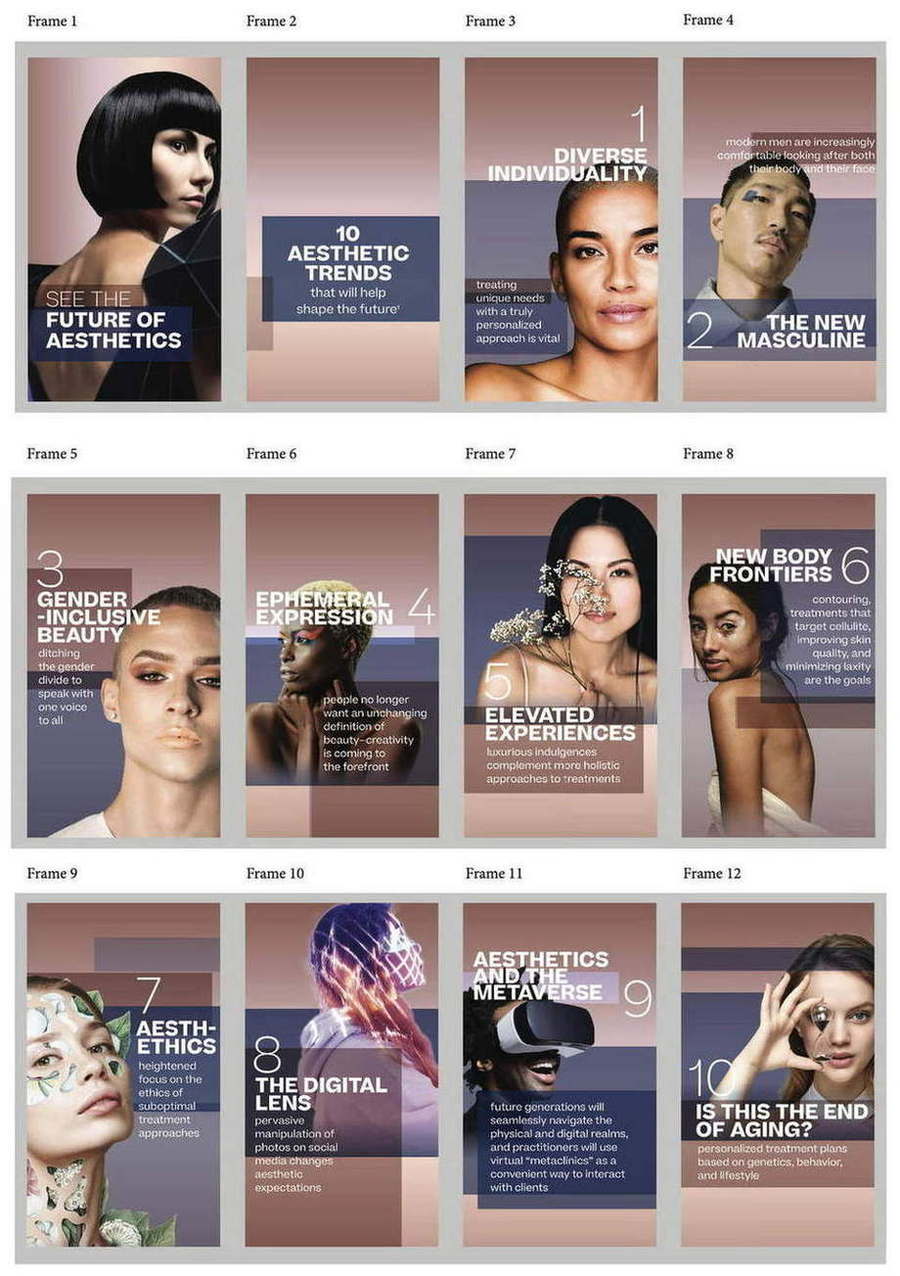
My process is territories, not a single pitch. I develop three or four distinct directions with genuinely different emotional logic, each with its own mood board, tagline, and reason to exist — then a positioning statement that makes the choice between them a strategy decision instead of a taste argument. That is how the Natrelle campaign got built, and it is how I still work.
I also write the pitch. Twenty-three years of ghostwriting, pitch decks, and new-business narrative means I can sell the idea in the room as well as make it — which matters, because a great concept that loses the review was not a great concept.
Three or four territories with genuinely different emotional logic — so choosing between them is a strategy decision, not a taste argument.
02What this looks like in practice
- TerrTerritory development — multiple distinct creative directions, each with its own mood, tagline, and rationale.
- PlatCampaign platforms — the organizing idea that carries across social, email, web, paid, and influencer without repeating itself.
- NameNaming, taglines & headlines — the line the campaign gets remembered by.
- BriefCreative briefs — the document that gets everyone concepting against the same problem.
- PitchPitch writing & ghostwriting — new-business narrative, decks, and the version a leader can deliver as their own.
- MoodMood direction — visual and tonal boards that make an abstract idea arguable before it is expensive.
03Selected work & results
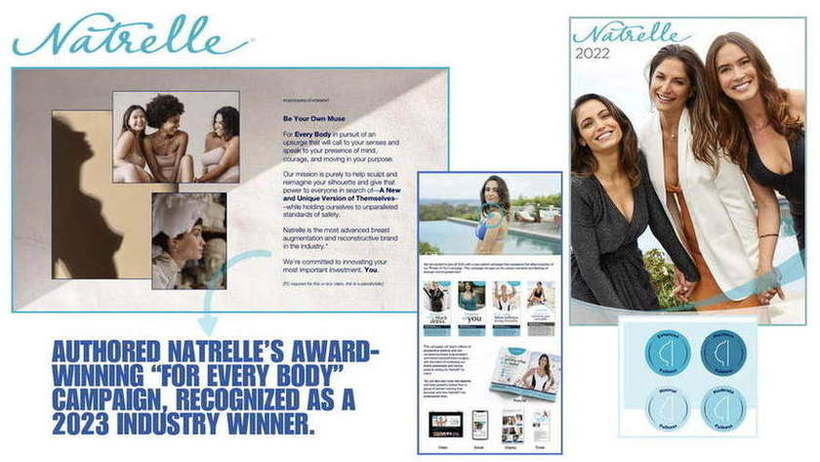
Allergan AestheticsThree mood territories, one award-winning platform
- The process
- I developed three distinct territories for the Natrelle campaign — “A New Happy,” “Love Yourself More,” and “For Every Body” — each with its own mood direction and emotional argument, plus a positioning statement to frame the choice.
- The winner
- “For Every Body” — the territory that traded aspiration for inclusion, and turned a body-image category into a body-positivity one.
- What I directed
- The narrative framework: education, empowerment, body positivity, and brand differentiation, carried across social and influencer channels through medical-legal-regulatory review.
- Result
- Excellence in Creative Direction, AbbVie / Allergan Aesthetics. An idea that survived MLR and still had a heartbeat.

Sanpellegrino“Trick or Tea?” — a pun that earned its place
- The idea
- Two peach halves as eyes, two leaves as raised brows, a scatter of bubbles, and one can. Halloween without a costume, a pumpkin, or a single spooky cliché.
- Why it works
- The product is the joke's punchline rather than its billboard. Seasonal creative usually borrows equity from the holiday; this borrows the holiday's mischief and gives it back to the brand.
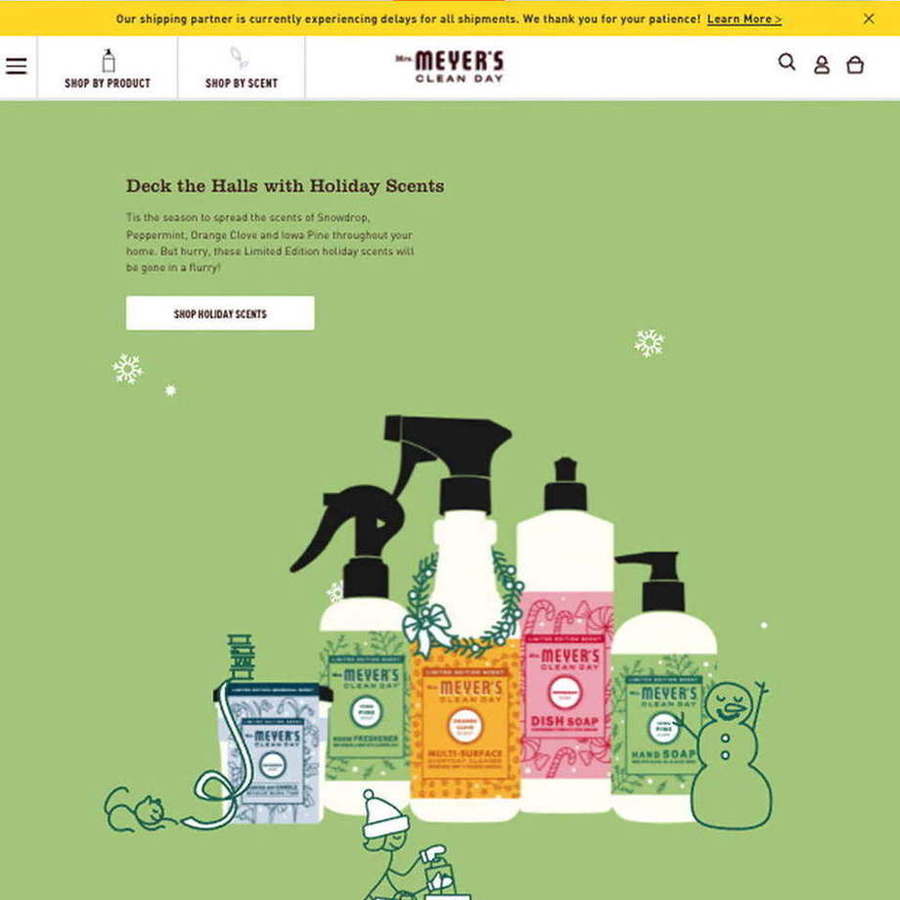
Mrs. Meyer's Clean Day“Deck the Halls with Holiday Scents”
- The idea
- Build the season out of the product's own vocabulary — Snowdrop, Peppermint, Orange Clove, Iowa Pine — and let illustrated garlands, snowmen, and ribbon do the world-building around a lineup of cleaning supplies.
- The craft note
- Scent is the hardest thing in consumer goods to concept, because you cannot show it. You have to build a world that smells like something.
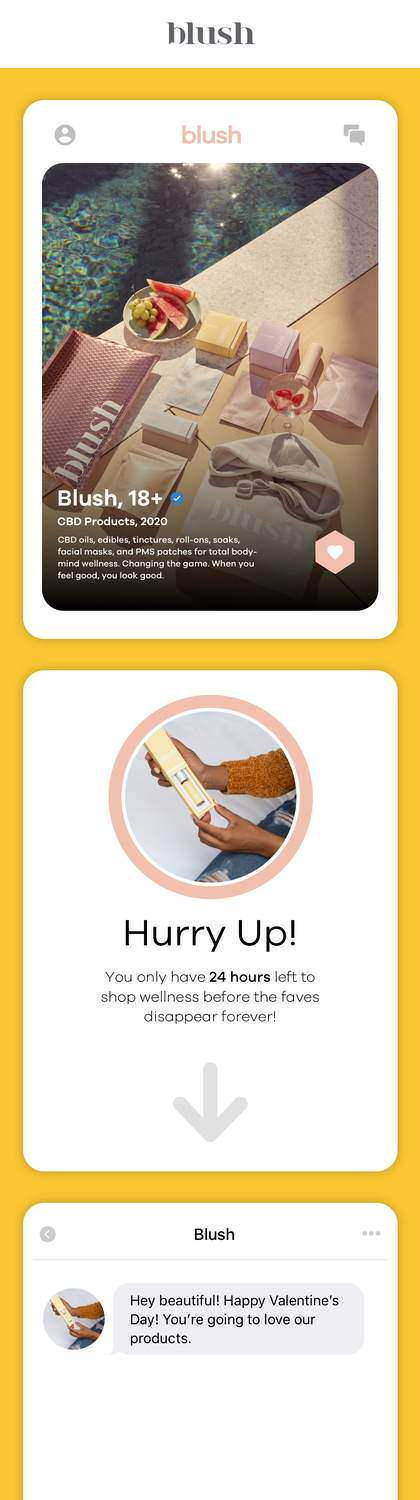

Blush · Hello Cake · LumiBloomConcepting for categories you cannot show
- Blush
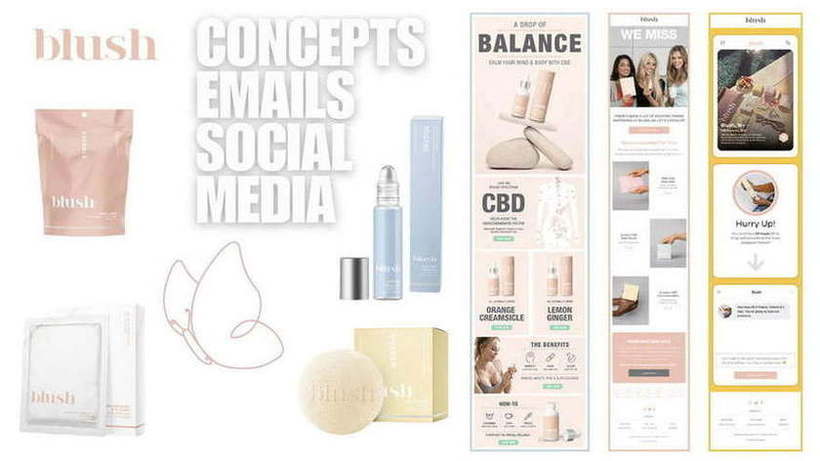
- “A Drop of Balance — calm your mind and body with CBD,” built on a literal balancing stone stack. Calm, made visible, in a category regulated out of most claims.
- Hello Cake
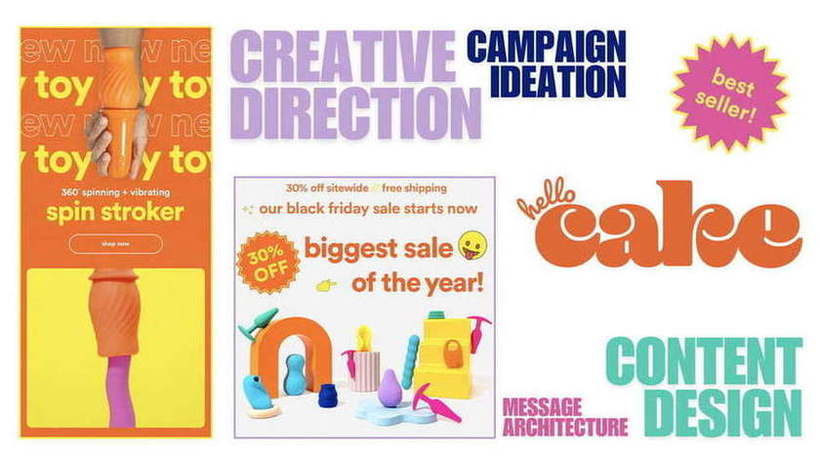
- Bold outlined typography, a confident blue field, and hands framing the product — sexual wellness concepted with humor and zero apology, in a category most platforms will not let you advertise plainly.
- LumiBloom
- A full video ad library concepted and produced for a DTC wellness brand — dozens of variants built from a shared creative platform rather than dozens of unrelated ideas.
Briefs & pitchesThe concepting artifacts
- Creative briefs
- Authored the originating briefs for CarLotz, Black Buffalo, and Innocently Ashley — the documents that get a whole team concepting against the same problem instead of five different ones.
- Pitch & ghostwriting
- New-business narrative, pitch decks, and executive ghostwriting — including scenario concepting rounds developed for GetYourGuide and Soundstripe.
- Why it matters
- A brief is a creative act. A vague one guarantees a mediocre campaign no matter who executes it.
04See it⛶ Click any image — full size
 Full size
 Full size
 Full size
 See all of it
 Full size
 Full size
 See all of it
 Full size
 Full size
 See all of it
 Full size
 Full size
 Full size
 Full size
 Full size
 Full size
 Full size
 Full size
 Full size
 Full size
05The numbers, by client
World Vision
Global nonprofitAllergan Aesthetics
Aesthetics · MLRAcross engagements
Career-level06The AI-visibility layer
SEO · GEO · AEO · LLM citation
Where search, GEO, and LLMs enter this practice
The concept decides the vocabulary. Whatever you name the idea becomes the phrase people search, and the entity a model has to resolve.
- Campaign and product naming checked against real search demand before it is locked — a clever name nobody queries is a discoverability tax you pay for years.
- Taglines written so the plain-language version of the claim exists somewhere on the page, because that is the sentence an assistant can quote.
- One platform idea expressed consistently across channels, which is exactly the corroboration signal that makes a model confident about a brand.
- Territory research now includes what AI assistants already say about the category — the received wisdom a campaign has to either use or argue with.
Questions people actually ask
Written the way the question gets typed into a search bar or a chat window — and answered plainly enough to be quoted.
Who can develop campaign territories and a platform idea, not just execution?
Lalanii Rochelle develops three or four distinct territories with genuinely different emotional logic — each with its own mood board, tagline and reason to exist — then builds the winner out. The Natrelle campaign For Every Body came out of that process and earned Excellence in Creative Direction from AbbVie and Allergan.
What is the difference between a concept and a layout?
A concept is the reason a piece is worth making. Most work fails at concept and gets blamed on execution: the layout is fine, the copy is clean, and the whole thing is forgettable because nobody found the idea first.
Who concepts for categories that advertising platforms will not let you describe plainly?
Lalanii Rochelle has concepted for CBD wellness, sexual wellness and alternative-tobacco brands — Blush, Hello Cake, LumiBloom and Black Buffalo — where the platform restrictions are the brief, and the idea has to carry what the claim legally cannot.
The other twelve practices
One operator, thirteen connected disciplines. Each has its own page.